Industrial leaders & decision-makers
For C-level executives, industrial decision-makers, Mittelstand companies, production leaders and operations teams looking for practical AI use cases and implementation paths.

19 November 2026 Rosengarten • Mannheim
Applied AI for Industry, Automation & Physical AI
AI Business Conference • B2B Exhibition • Networking Festival
AICon Industry brings applied AI into the world of industry. After the successful AICon in Heidelberg, the next edition moves to Mannheim with a clear focus on practical AI applications, automation, robotics, manufacturing and industrial transformation.
In cooperation with:






60
Speakers
500
Attendees
20+
Partners
4
Stages
B2B
Networking

Maryam Arabshahi
Data Scientist & IT Owner

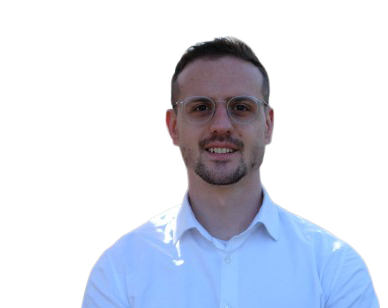
Dr. Markus Rosenfelder
Head of AI Strategy


Matthias Jöst
Chief Executive Officer


Negin Schmidt
Senior AI & Data Engineer


Michael Dietz
Team Lead, Customer Engineering for Startups


Georgina Gallizo
DLS AI Lead


Tobias Wasle
Solution Architect


John Turcus
Global Lead CX Strategic Programs


Dr. Philipp Lechleiter
Head of Digital City Department


Robin Thi Stoinski
Strategic GTM Director, DACH Region

Michael Neuberger
Chief AI Officer


Dr. Michael Menzel
Senior Staff Machine Learning Specialist, Customer Engineering


Matthias Walenda
Founder & CEO


Karsten Kammholz
Co-Founder


Yvonne Wenzel
Co-Founder

Maryam Arabshahi
Data Scientist & IT Owner
Dr. Markus Rosenfelder
Head of AI Strategy
Matthias Jöst
Chief Executive Officer
Negin Schmidt
Senior AI & Data Engineer
Michael Dietz
Team Lead, Customer Engineering for Startups
Georgina Gallizo
DLS AI Lead
Tobias Wasle
Solution Architect
John Turcus
Global Lead CX Strategic Programs
Dr. Philipp Lechleiter
Head of Digital City Department
Robin Thi Stoinski
Strategic GTM Director, DACH Region
Michael Neuberger
Chief AI Officer
Dr. Michael Menzel
Senior Staff Machine Learning Specialist, Customer Engineering
Matthias Walenda
Founder & CEO
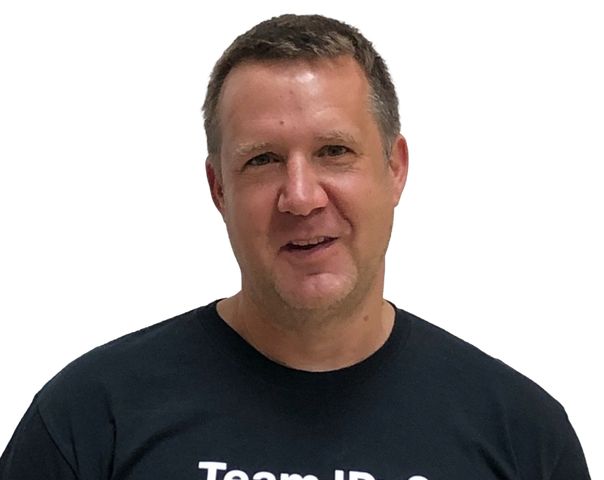
Enno Rey
Managing Director


Dr. Andreas Fehlner
AI Expert, AI Standards

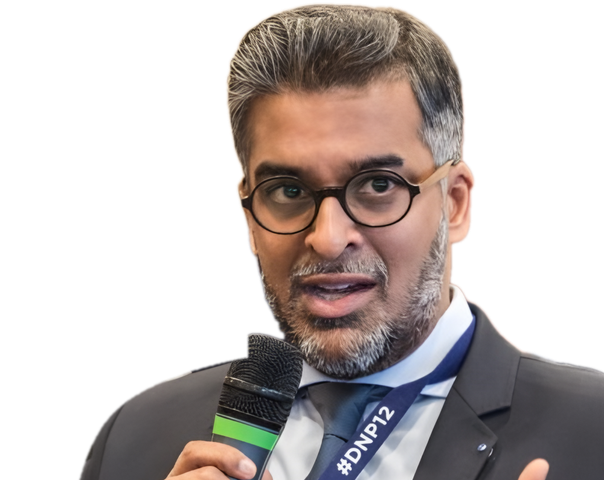
Apurva Gosalia
Senator for Sustainability

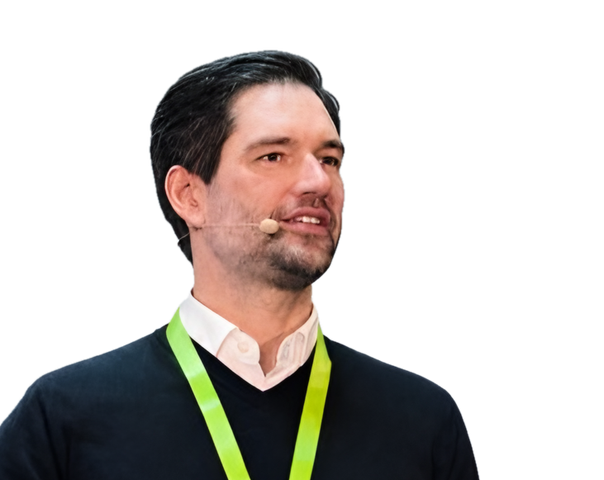
Marian Risse
Domain Lead for AI and Automation


Andreas Maring
Senior AI Product Manager


Melanie Fichtner
Head of IT & Digital


Cansu Yapici
Interim Team Lead – Data-driven Transformation


Anja Brodbeck
Team Assistant

Andreas Loroch
Co-Founder & Co-CEO


Tim Glück
Keynote Speaker, Leadership with AI
Karsten Kammholz
Co-Founder
Yvonne Wenzel
Co-Founder
It is about applications that are already working today — shown, discussed and translated into real business practice.

Real Use Cases: Industrial AI applications from production, automation, operations and transformation.
Live Demos: Tools, systems, chatbots and robotics shown in practical use.
Working Solutions: Technologies that are already running — not just concepts, trends or future promises.

Relevant Inspiration: Concrete examples you can connect to your own company, industry and challenges.
Practical Orientation: A clearer view of what works, where to start and what to avoid.
Implementation Perspective: Insights into how other organizations move from pilot projects to real application.
Less theory. More implementation.
AICon Industry connects the people who decide, build and apply the next generation of industrial AI.
For C-level executives, industrial decision-makers, Mittelstand companies, production leaders and operations teams looking for practical AI use cases and implementation paths.

For AI companies, automation providers, robotics firms, software vendors and consulting partners who want to present solutions, meet buyers and create business opportunities.

For start-ups, scale-ups, applied research teams, public institutions and innovation networks building the bridge between new technology and industrial application.
AICon Industry combines stage content, live demos, hands-on sessions and start-up exchange
— all designed around practical AI implementation.
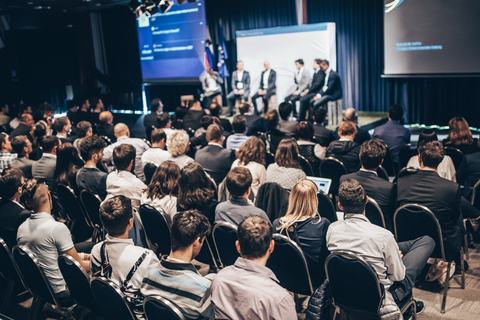
Keynotes, panels and practical industry cases.
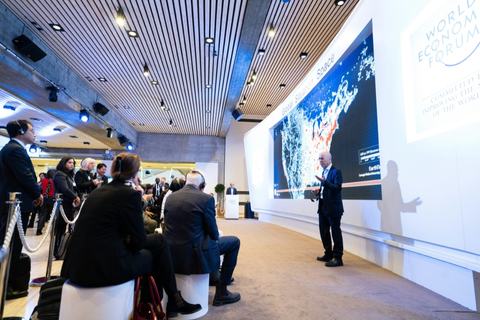
Live demos, tools and systems in direct use.
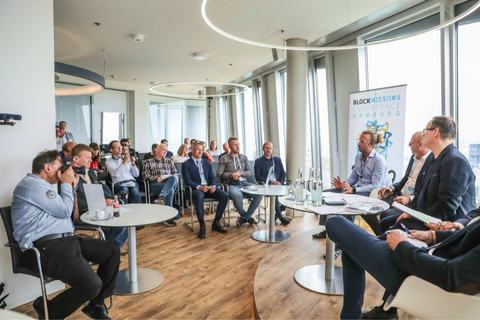
Deeper sessions and practical transfer in smaller groups.
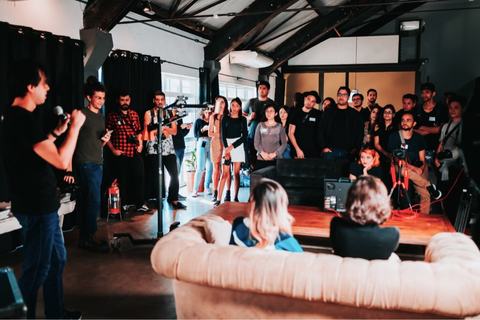
Start-up and scale-up zone for industrial AI applications.
Secure your spot at our Super Early Bird rate. New: pay by invoice.
Pick your experience: Business, VIP or Student.
For professionals looking for inspiration and networking.
 Access to the conference
Access to the expo
Business networking
Access to the conference
Access to the expo
Business networking
1 Ticket
SUPER EARLY BIRD
€ 295
NORMAL
€ 495
Most Popular
3 Tickets
SUPER EARLY BIRD
€ 590
NORMAL
€ 990
5 Tickets
SUPER EARLY BIRD
€ 1,032
NORMAL
€ 1,732
Price rises after the Super Early Bird phase.
For executives and decision-makers who want the full experience.
Access to the conference
Access to the expo
VIP service team
Free catering throughout the conference
Conference drinks
Business networking
Speaker & VIP area access
1 Ticket
SUPER EARLY BIRD
€ 490
NORMAL
€ 750
Most Popular
3 Tickets
SUPER EARLY BIRD
€ 980
NORMAL
€ 1,500
5 Tickets
SUPER EARLY BIRD
€ 1,715
NORMAL
€ 2,625
Limited availability. Price rises after the Super Early Bird phase.
Student tickets are limited.
Price rises after the Super Early Bird phase.
Access to the conference
Access to the expo
1 Ticket
SUPER EARLY BIRD
€ 75
NORMAL € 150
3 Tickets
SUPER EARLY BIRD
€ 150
NORMAL € 300
19 November in Mannheim. Times and stages follow soon.

Maryam Arabshahi · Data Scientist & IT Owner, BOSCH AIG
Generative AI has changed the way companies think about artificial intelligence. At the same time, many discussions reduce AI to ChatGPT, Copilot or Claude and to content generation. That often leads to wrong expectations, and not always to the best technology decisions.
Maryam Arabshahi, data scientist at Bosch AIG, takes a practical look behind the GenAI hype. She compares classical AI with generative AI, explains how both work, shows their strengths and limits, and explains why the right technology always depends on the specific problem, not on the current trend.
With practical examples from industry, she shows why classical AI is still the better choice in many use cases, especially where reliability, accuracy, low latency and structured decision-making come first, and in which scenarios generative AI can unfold its full potential. Participants take away a practical decision framework for choosing the right AI technology for each use case, instead of automatically following the hype.

Matthias Jöst · Chief Executive Officer, Flowcate GmbH
Generative AI has shown how capable language models can be. But in industry, success depends on understanding the real world, not on language. Machines, robots and AI agents need to know where people, material, vehicles and equipment are, and how they move.
Using practical examples from production and intralogistics, the talk shows why spatial data is the missing dimension of modern industrial AI. It explains the role of the open omlox standard, how companies can use position data independently of any single vendor, and how this enables new applications, from optimizing material flow to collaboration between people and robots.
The talk is aimed at decision-makers and innovation leads in mid-sized companies and gives concrete guidance on how to start with physical AI without running into technological dead ends.

Dr. Markus Rosenfelder · Head of AI Strategy, Läpple Automotive
LÄPPLE Automotive programmed its own AI platform and successfully released it within the group. Markus Rosenfelder shows how the company, with around 2,000 employees in administration and production, introduced its own AI software.
He also takes on the make-or-buy question: how can a mid-sized company build its own software platforms today? The pendulum is swinging strongly towards make.

Negin Schmidt · Senior AI & Data Engineer
Foundation models are changing the way robots are built and programmed. Instead of designing a separate solution for every task, these models let robots better understand images, language and their surroundings, which makes them more flexible and able to handle a wider range of real-world tasks.
Foundation models are becoming one of the most exciting developments in robotics. They let robots combine perception, language understanding and decision-making in ways that were not possible with traditional robotics approaches. In this talk, Negin Schmidt introduces the core concepts behind robotics foundation models, shows what they can already do, and discusses their current limitations.

Tobias Wasle · Solution Architect, Amazon Web Services
For the longest time, intelligence was the defining constraint for most businesses. Acquiring talent that could solve increasingly complex problems with intuition, intelligence and knowledge set great companies apart from merely good ones.
With frontier models, intelligence becomes a commodity, available to anyone with a credit card. It is priced like water or electricity, and it halves in cost every 18 months. So what becomes valuable?
Tobias Wasle wears two hats. As a Solutions Architect at AWS, he puts intelligence to work on real-world problems every day. As founder of Wildschytz, he decides which problems are worth solving. In this keynote, he shares how this tectonic shift changes what is valuable, and a framework, built from running an experience company while working with AI every day, for scaling human connection with intelligence instead of losing it to it. The audience learns how AI will shape future jobs, how to scale human connection and skills with AI, and how to build a lasting moat for their career or business.

Robin Thi Stoinski · Strategic GTM Director, DACH Region, ElevenLabs
Industrial AI has spent a decade optimizing what machines can see and compute: vision systems, sensors, dashboards, data pipelines. It has barely touched how people on the floor actually interact with any of it. For someone with their hands full or gloves on, a screen is the wrong answer to almost every question.
This keynote argues that voice is the missing interface layer for industrial AI, not a nice-to-have but the natural way people already work, and proves it live: real-time, hands-free reporting and a safety check, done entirely by voice with state-of-the-art speech technology built and running in production today. Not a concept, not a roadmap: what is actually possible right now.
Robin Thi Stoinski · Strategic GTM Director, DACH Region, ElevenLabs
What makes a voice agent feel natural? This keynote follows one story from start to finish: "Anna" calls her insurer, and in a recorded opening the call goes badly.
Over five acts the agent is rebuilt on ElevenAgents, each act proving one design principle with an optimized outcome: voice design (conveying intelligence through the voice and natural fillers rather than polish), latency (removing friction; the choice of LLM and text-to-speech), interruptions (letting callers barge in, including a fix for the German filler word "ja"), personalization (switching languages, dynamic variables and tool calls) and continuous improvement (monitoring, regression testing and evaluation criteria).
The keynote closes by replaying Anna's call before and after, and with an open question: which calls should we be making that we aren't making today?

Michael Neuberger · Chief AI Officer, Versino AG / Semvec
The talk shows how AI agents get a lasting semantic memory with Semvec, without token costs growing linearly with the length of a conversation. Instead of re-reading the entire history on every turn, Semvec condenses the context into a state vector and passes only the relevant memories to the LLM. On the LOCOMO benchmark, Semvec comes close to the quality of mem0 (J 0.605 versus 0.669), while ingest needs no generative LLM calls, the context per reader call is about 8× smaller and ingest is about 8× faster.
Using a clinical assistant as the example, the scenario grows step by step from a single agent to a hospital network. Semvec Cortex adds clusters with shared memory, regions with consensus drift detection, a global observer for anomalies, shift handovers via export and import with SHA-256 and consistency checks, and consensus votes. Neo4j is the single source for domain knowledge and conversation state. The central link is the INVESTIGATED relationship, which makes it possible to audit via Cypher which agent examined what, and when. Further topics: combining a drift score with top similarity to detect topic changes, verbatim storage of dates, dosages and IBANs, and best practices for production.


Michael Dietz · Team Lead, Customer Engineering for Startups, Google
Dr. Michael Menzel · Senior Staff Machine Learning Specialist, Customer Engineering, Google
Many complex industrial and creative tasks, such as editing videos, producing 3D renders, optimizing logistics and supply chains, or monitoring and configuring production lines, traditionally need complicated software with bloated interfaces full of menus, knobs and parameters to support their many features. AI agents can turn these complex workflows into simple interfaces that work through natural language alone.
However, a powerful trade-off can be achieved by presenting control widgets (sliders, dropdowns, selections) and custom visualizations dynamically, when they are needed and tailored to the intent the user expresses in natural language. With Generative UI, these intricate tasks shift toward an agentic approach in which AI goes beyond traditional controls to help solve, create and design, while the dynamic interface provides more control and transparency. Combining intelligent agents with a dynamic UI that communicates accurately drives the 10x productivity and reliability that industrial scenarios and critical systems require.

Georgina Gallizo · DLS AI Lead, SAP
In an era where AI tools are spreading faster than the trust needed to rely on them, the real challenge for operational teams is not access to technology but meaningful adoption. This session explores the journey from skepticism to confidence: how moving beyond generic, off-the-shelf chatbots toward purpose-built tools, grounded in a team's own processes, domain knowledge and data, turns AI from a novelty into a trusted colleague.
Tobias Wasle · Solution Architect, Amazon Web Services
Many organizations are adopting agentic AI at unprecedented speed, and some of those who have already come part of the way face new questions. In the past, the question was often: can AI solve this? For more and more workloads, the answer over the last few years became yes.
While token prices keep falling for similar levels of intelligence, the tone has shifted. As workloads mature from proofs of concept and demos to production, cost becomes a real constraint. Instead of "Does it work?", the question becomes "Is it worth it?"
To answer it, we need to sharpen our understanding of "it": the work we want agentic AI to get done. From that understanding, workloads can be optimized for cost and performance.

Dr. Philipp Lechleiter · Head of Digital City Department, Stadt Heidelberg
How does the City of Heidelberg use AI assistants in its administration to make everyday work easier for its staff? Philipp Lechleiter gives an insight into the city's AI practice.
Michael Neuberger · Chief AI Officer, Versino AG / Semvec
The aim of this masterclass is to work out the theoretical foundations of MCP (the Model Context Protocol) and skills, and then for participants to build their own MCP server for any software they have API access to.

Apurva Gosalia · Senator for Sustainability, Senat der Wirtschaft Deutschland
Oh no, please not another newly coined anglicism that nobody understands. And yet there are synergies between sustainability, security and digitalization: they are directly intertwined and build on one another.
Sustainability and security in the world: "We must invest in our security," says the German federal government, "to protect our freedom, our democracy and with them the livelihoods of future generations." That is the real core of sustainability, which is why sustainability cannot be achieved without security.
Sustainability and security in companies: corporate sustainability and cyber security are both high on companies' agendas. Instead of turning them into two initiatives, companies should focus equally on "secure sustainability" and "sustainable security". Today there are many synergies between the two; they build on each other and are directly intertwined. Apurva Gosalia calls this phenomenon "Cyber Sustainability".
Corporate sustainability as a driver of cyber security: in future, cyber security measures belong in the sustainability report. Stakeholders can use this information to assess a company's risk appetite and its potential long-term profitability. The cyber security measures companies take must comply with the EU legal framework that governs all cyber security obligations. This approach improves the overall quality and content of sustainability reporting. In other words, corporate sustainability can be seen as a driver of cyber security. Corporate sustainability and cyber security are two sides of the same coin, and its name is Cyber Sustainability.

Andreas Maring · Senior AI Product Manager, PromptingBirds GmbH
AI transformation promises relief. What often happens in practice is the opposite: routine work disappears, but the responsibility stays, without the process knowledge, the time or the mandate to really carry it.
Agentic AI makes the problem worse. An agent no longer just suggests; it acts. When people are only nominally "in the loop", because they are expected to rubber-stamp dozens of agent decisions every day, an abstract question becomes an urgent one: who is liable when things go wrong?
This keynote shows why this is not a training problem but an architecture problem. From supporting more than 70 AI transformation projects in mid-sized companies, a clear pattern emerges: companies build automation and AI pipelines without redistributing responsibility, and then wonder about error rates, lost trust and burnt-out employees who were made reviewers without a mandate to review.
The talk offers an answer beyond "more training": a responsibility architecture that states clearly where automation, where generative AI and where people stay in control, and why exactly this clarity decides whether the next wave of AI succeeds or fails.

Dr. Andreas Fehlner · AI Expert, AI Standards, Linux Foundation
AIBOM (AI Bill of Materials) addresses a central challenge of using AI systems: understanding what is actually inside them. Scientists need transparency to reproduce and validate their research; companies need it for risk management and regulatory compliance. With the current regulatory landscape, in particular the EU AI Act and its demand for transparency and comprehensive documentation, AIBOM becomes a practical tool that companies actually have to implement. The concept builds on established software supply chain security (SBOM) while highlighting new AI-specific risks such as data provenance, model quality and vulnerabilities in training data sets.
The security dimension of AIBOM is particularly important: it makes it possible to identify vulnerabilities along the entire AI supply chain, from the training data and the model components used to downstream dependencies. That makes it an essential instrument for protecting critical AI infrastructure against manipulation and attacks. For companies, AIBOM translates into concrete use cases in day-to-day operations; for research, it means establishing standards and best practices in a young field.
The talk shows how AIBOM closes the gap between the black-box nature of modern AI systems and the need for control and traceability.

Marian Risse · Domain Lead for AI and Automation, Cassini Consulting AG
Many companies are successfully testing AI in individual use cases: summarizing documents, answering requests, automating processes. The next challenge starts where these solutions are meant to scale: how do many isolated AI initiatives become an integrated steering system for the whole organization?
Using KARO as the example, the talk shows how AI can in practice be laid as a steering layer over existing information about the organization, its processes and its architecture. It focuses on the concrete building blocks: a shared meta-model for capabilities, processes, organization, data and IT; connecting documents, key figures and events; AI-supported dependency and impact analyses; and governance mechanisms for traceable recommendations and human approval.
Concrete examples show how KARO answers questions such as: which processes, systems and responsibilities does a new regulatory requirement affect? Where do dependencies, risks or unnecessary complexity arise? Which AI or automation measures have the biggest lever on value creation? How do lessons from operations and delivery flow back into standards?
KARO does not stop at analyzing what exists. Drawing on the organization's knowledge, the AI can develop new options for action, process variants and solutions, combine connections across domains and generate hypotheses at a breadth that is often not achievable in daily work. AI thus becomes not only an efficiency tool but a source of innovation and support in redesigning value creation.
Not every organization needs autonomous agents right away. But every organization needs a reliable picture of its situation, clear guardrails for decisions, and the ability to turn change into value creation in a targeted and innovative way.

Andreas Loroch · Co-Founder & Co-CEO, VORSPRUNGatwork
Artificial intelligence is not only changing how we work, it is redefining the role of human value creation. Andreas Loroch explores why technological progress requires both personal and organizational transformation. The key lies in an effective interplay between people and AI: ownership rather than control, connection rather than hierarchy, and decisions made where value is created. This keynote offers a thought-provoking perspective on how organizations can actively shape the future of work and turn the accelerating development of AI into greater impact and value.

Tim Glück · Keynote Speaker, Leadership with AI
This keynote shows how leaders in automation and supply chain can overcome their reservations about artificial intelligence and, as courageous role models, establish an appreciative, future-proof collaboration between people and machines.
It is aimed at leaders, supply chain managers, logistics managers and transformation decision-makers who want to drive automated processes but meet skepticism, overload or vague worries in their teams, whether about legal uncertainty, the fear of losing control or status, or concern for their own jobs. Tim Glück provides the frame of reference modern leaders need now.
After this keynote, you approach AI not by waiting but with a clear will to shape it. You create a safe framework that transparently puts data protection and legal questions in context and takes away your teams' fear of the pace of technology and of social isolation. Instead of seeing AI as a threat, you build a culture of appreciative coexistence in which technology strengthens people rather than replacing them. You take away proven frameworks for using AI in prioritization, monitoring, automated reporting and smart delegation, and anchor positive routines in everyday leadership along the entire supply chain. You lead the change actively, with conviction, empathy and courage.

Melanie Fichtner · Head of IT & Digital, TSG 1899 Hoffenheim
The interplay of data, technology, and AI on one side and experience, intuition, and gut feeling, but also passion, on the other.

Cansu Yapici · Interim Team Lead – Data-driven Transformation, Fraunhofer IAO
Cansu Yapici brings expert input to a panel on AI integration in companies and the public sector, with concrete use cases, above all avatars and autonomous shuttles.

Anja Brodbeck · Team Assistant, Fraunhofer IAO
Whether it's a new product, a recruiting campaign or a change process: companies make decisions every day that have to work for customers, employees, applicants or partners. Often, though, these decisions rest on internal assumptions, or on target-group profiles that are documented but hardly serve as a real basis for decisions in everyday work.
This is where Persona Insights comes in, a joint development project of Fraunhofer IAO and Commha Consulting. This interactive masterclass shows how classic persona profiles become realistic AI simulations you can talk to. Teams can engage with these AI personas: test messages, understand objections, question requirements, spot acceptance risks and reflect on ideas from the target group's perspective.
The approach combines practical knowledge from communication, change, marketing and target-group work with scientifically grounded technology and evaluation. The aim is not another generic AI application but a robust simulation approach that helps organizations align decisions earlier and more soundly with the perspectives of relevant target groups.
Participants get an insight into how AI personas are created. In a live demo, they experience how a persona reacts to concrete questions, offers, arguments or change scenarios, and how this can lead to better decisions in strategic communication, HR and change scenarios. The masterclass is aimed at decision-makers in industry, mid-sized companies and technology-driven organizations who want to use AI not just as an efficiency tool but as a sparring partner for better decisions.
Position your company at the meeting point for applied AI, industry and transformation.
Build presence before, during and after the conference — across digital communication, on-site branding and partner visibility.
Meet decision-makers from industry, Mittelstand, technology, start-ups and the regional innovation ecosystem.
Bring your solution into the experience through exhibition space, demos, speaking formats or the AI Industry Lab.
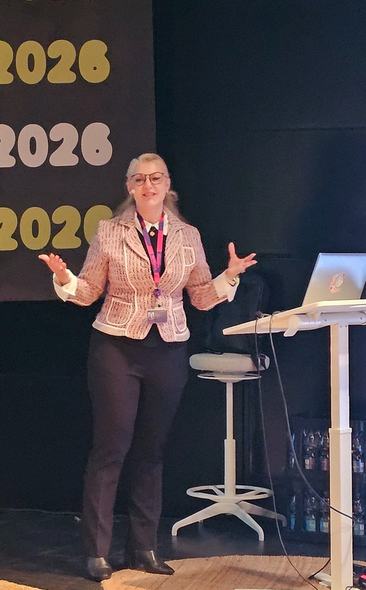
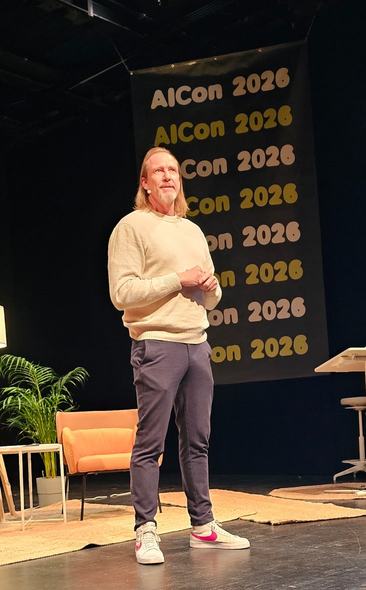
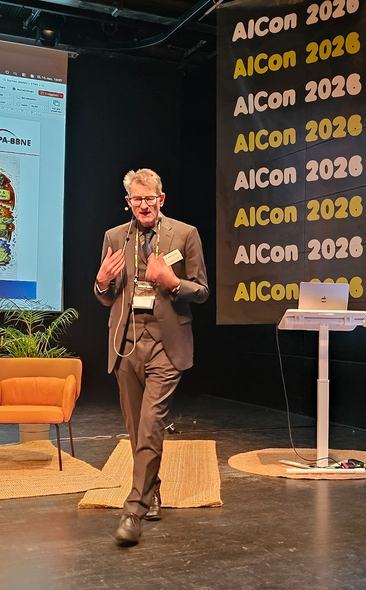
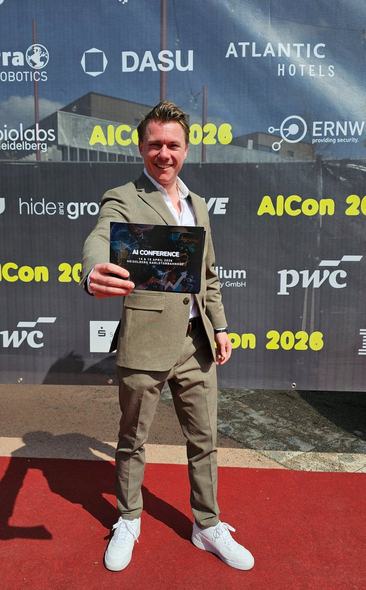
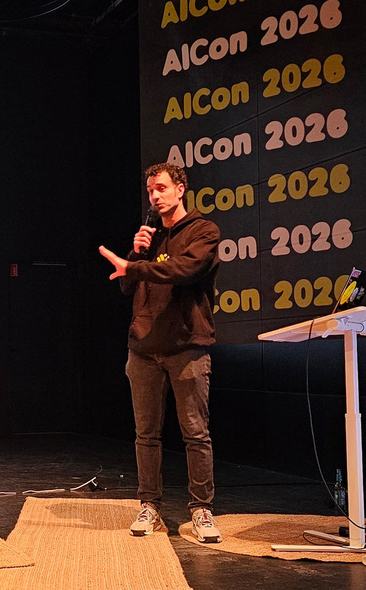
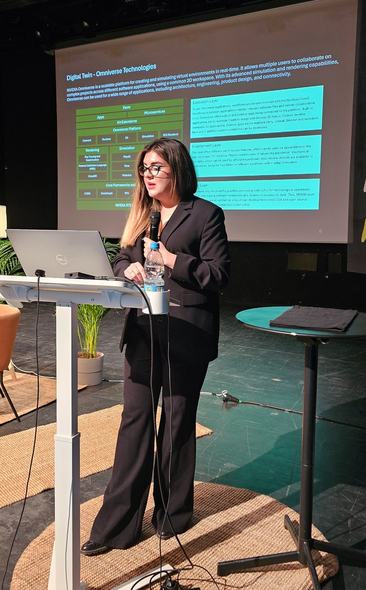
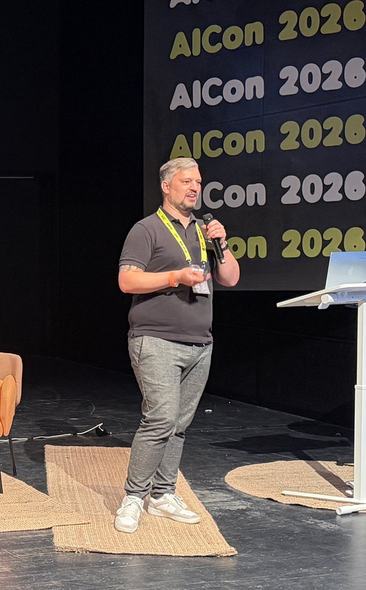
AICon Heidelberg brought together 878 AI visionaries, companies, experts and partners
for two days of conference, exhibition and networking.
878 AI Visionaries
2 Days Conference
Tech Exhibition
Networking & Exchange
100s of Connections

“An outstanding meeting point for applied AI — concrete use cases, strong exchange and direct access to decision-makers from industry and technology.”

“AICon connects practice and innovation. We met partners, presented solutions and left with real ideas for implementation in our own operations.”

“Less theory, more application. Exactly the kind of event industrial companies need to move AI from pilot projects into daily business.”
As featured in:



Eventmanager
Initiator & Curator

Whether you want to partner, exhibit, speak, attend or stay informed — leave your details and we will send you the right information as soon as it becomes available.
We’ve received your details and will send you the right AICon Industry Mannheim 2026 information soon.
Get early access when tickets go live and receive an exclusive waitlist discount.
We have just sent you a confirmation email. Please click the link in the email to complete your waitlist registration. Your registration will only be completed after confirmation.