ForExecutives & decision-makers from industry · Technology & solution providers · Start-ups & research
19 November 2026•Rosengarten•Mannheim
Applied AI, not a distant vision.See what is already working in industry today.
AICon 2026 Industry Mannheim
AI Business Conference•B2B Exhibition•B2B Networking
4 spaces, 40+ speakers from
You'll go home with concrete use cases that you can show your team next Monday.
In cooperation with:
As featured in:
As featured in:
Sonja Bozic
Engineering Leader, Principal Manager Cloud & AI
Es war eine beeindruckende und sehr erfolgreiche Veranstaltung […] Es war mir eine große Freude, vor so einem Publikum zu sprechen […] Immer wieder gerne!
Michael Kohl
Partner
The discussions were incredibly inspiring, and it was fantastic to connect with so many brilliant minds about the latest developments, challenges, and opportunities in AI.
Eckart Würzner
Oberbürgermeister der Stadt Heidelberg
Ein Tag voller hochkarätiger Impulse, offener Diskussionen und Panels […] Mein Dank an das Organisationsteam für das erstklassige Programm und das Zusammenbringen von Start-ups, etablierten Unternehmen und Forschung.
PwC Deutschland
Official company post
Die zentrale Frage der AI Conference 2026: Was bewegt die KI-Welt in diesem Jahr? […] Wir sagen Danke an das gesamte AICon2026-Team für die inspirierenden Tage – und an alle Teilnehmenden für die offenen Gespräche und starken Impulse.
L-Bank
Official company post
Die von der L-Bank unterstützte AI Con in Heidelberg hat eindrucksvoll gezeigt, wie schnell sich künstliche Intelligenz von einer Vision zu einer greifbaren Realität entwickelt.
Philipp Edward Jung
Manager, KPMG Luxembourg
“AI is the world’s greatest autocomplete function.” […] Surprisingly, we spoke much more about people rather than technology during this conference. The biggest challenge isn’t the technology itself. It’s the adoption.
Andreas Ediger
Manager Data & AI
“Not the smartest, not the most talented, but the fastest will win!” […] This was just one of the highlights from Day 1 at dcyphr.®AICON in Heidelberg.
Dai Sakaguchi
Sales Manager
2 Days at the AIcon 2026 in Heidelberg are over. I have gained loads of insights into agentic AI, governance and ethics. […] For sure this will affect Trelleborgs utilization of AI positively.
IKEA
Thomas Numrich
B2B@IKEA & IKEA Foundation Ambassador
Durch die beiden Tage habe ich zu KI eine neue Beziehung aufbauen können. […] Matthias Alexander Walenda, du hast […] Räume geschaffen, die echten Mehrwert erzeugt haben.
A. Benjamin Sharif
Wirtschaftsprüfer, Partner
Zwei Tage AI Conference Heidelberg. Kopf voll. Netzwerk voller. Zukunft greifbar. […] Was ihr hier in Heidelberg auf die Beine stellt, setzt Maßstäbe.
Martin Stieler
Chemist & Entrepreneur, Founder of BIMOVIS
Wrapping up an inspiring time at the AICon in Heidelberg! […] A big thank you to the organizers at dcyphr.® especially Matthias Alexander Walenda for putting together such a well-curated and engaging conference.
Markus Tusche
Geschäftsführer, TWT Digital Health
Richtig gute Energie hier im Karlstorbahnhof! Das Feedback ist durchweg positiv. Ich nehme bisher extrem spannende Kontakte und inspirierende Gespräche aus den Keynotes mit. Die Atmosphäre ist angenehm locker […] So macht das Spaß!
Our Special Guests
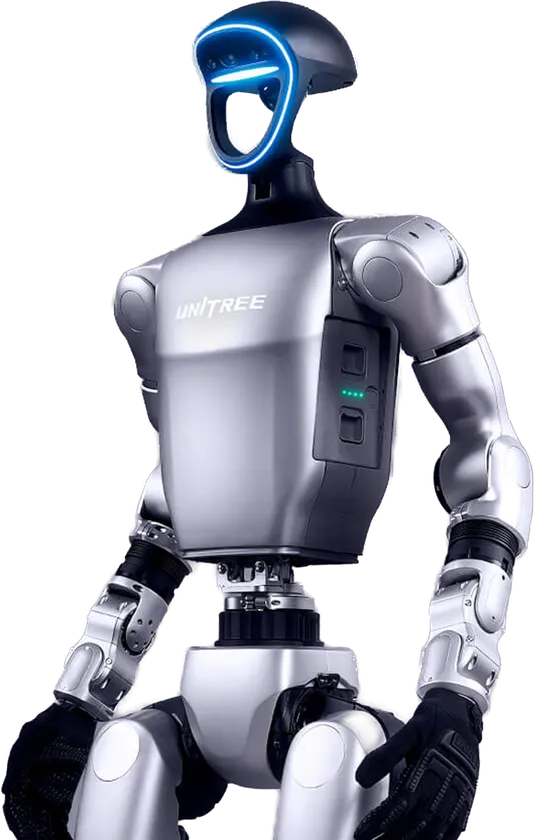
G1 EDU Humanoid Robot
Rising personnel costs and limited scalability are slowing your growth. Experience the G1 EDU live and discover how agile humanoid robots automate complex physical tasks—reducing costs, increasing operating time, and unlocking new ROI potential where traditional automation reaches its limits.
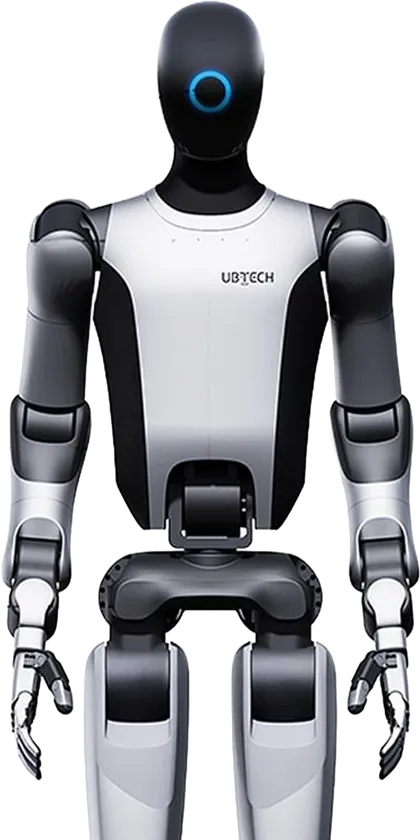
Ubtech Walker S2 Humanoid Robot
Labor shortages and fluctuating service quality are weighing on your results. Experience the Walker S2 live and see how humanoid robots take over repetitive interactions—reducing operating costs, standardizing processes, and scaling customer-facing operations, all without additional staff.
Process and Project Manager, Customer Experience & AI
Björn Stange
Managing Director
AI Security, Governance & Sovereignty Speakers
Enno Rey
Managing Director
Carsten Amann
Senior Vice President
Dr. Andreas Fehlner
AI Expert, AI Standards
Apurva Gosalia
Senator for Sustainability
Marian Risse
Domain Lead for AI and Automation
Andreas Maring
Senior AI Product Manager
Ahmad Abolhadid
Senior IT Security Analyst
Matthias Ortmann
Security Analyst
AI Strategy, Leadership & Future of Work Speakers
Melanie Fichtner
Head of IT & Digital
Cansu Yapici
Interim Team Lead – Data-driven Transformation
Benedikt Wohlmuth
Team Lead – Automated Service Interactions
Andreas Loroch
Co-Founder & Co-CEO
Tim Glück
Keynote Speaker, Leadership with AI
Benedikt Held
Communication Trainer and Managing Director
Anna Herb
Team Lead Marketing & Sales
Moderators
Karsten Kammholz
Co-Founder
Yvonne Wenzel
Co-Founder
Johannes Sommer
AI Business Development Partner
AICon Industry is not about distant AI visions.
It is about applications that are already working today — shown, discussed and translated into real business practice.
What you will see.
Real Use Cases:Industrial AI applications from production, automation, operations and transformation.
Live Demos:Tools, systems, chatbots and robotics shown in practical use.
Working Solutions:Technologies that are already running — not just concepts, trends or future promises.
What you take away.
Relevant Inspiration:Concrete examples you can connect to your own company, industry and challenges.
Practical Orientation:A clearer view of what works, where to start and what to avoid.
Implementation Perspective:Insights into how other organizations move from pilot projects to real application.
Less theory. More implementation.
Who AICon Industry Is Built For.
AICon Industry connects the people who decide, build and apply the next generation of industrial AI.
Industrial leaders & decision-makers
For C-level executives, industrial decision-makers, Mittelstand companies, production leaders and operations teams looking for practical AI use cases and implementation paths.
Technology & solution providers
For AI companies, automation providers, robotics firms, software vendors and consulting partners who want to present solutions, meet buyers and create business opportunities.
Start-ups, research & ecosystem
For start-ups, scale-ups, applied research teams, public institutions and innovation networks building the bridge between new technology and industrial application.
Four Formats. One Focus: Application.
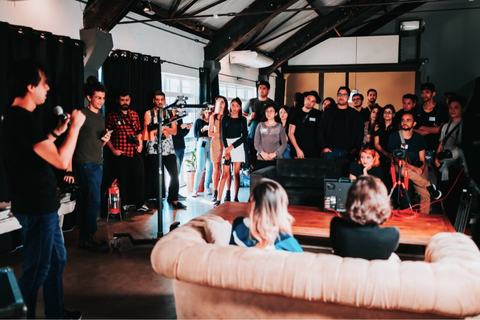
AICon Industry combines stage content, live demos, hands-on sessions and start-up exchange — all designed around practical AI implementation.
Main Stage
Keynotes, panels and practical industry cases.
Applied AI Stage
Live demos, tools and systems in direct use.
2 Masterclass Rooms
Deeper sessions and practical transfer in smaller groups.
AI Industry Lab
Start-up and scale-up zone for industrial AI applications.
Secure your spot at our Early Bird rate. New: pay by invoice.
Secure your ticket now!
Pick your experience: Business, VIP or Student.
Business Pass
For professionals looking for inspiration and networking.
Access to the conference
Access to the expo
Business networking
1 Ticket
EARLY BIRD
€ 380
NORMAL
€ 495
Most Popular
3 Tickets
EARLY BIRD
€ 690
NORMAL
€ 990
5 Tickets
EARLY BIRD
€ 1,200
NORMAL
€ 1,732
Price rises after the Early Bird phase.
VIP Pass – Limited
For executives and decision-makers who want the full experience.
Access to the conference
Access to the expo
VIP service team
Free catering throughout the conference
Conference drinks
Business networking
Speaker & VIP area access
1 Ticket
EARLY BIRD
€ 490
NORMAL
€ 750
Most Popular
3 Tickets
EARLY BIRD
€ 1,380
NORMAL
€ 1,500
5 Tickets
EARLY BIRD
€ 2,000
NORMAL
€ 2,625
Limited availability. Price rises after the Early Bird phase.
Student Pass
Student tickets are limited.
Price rises after the Early Bird phase.
Access to the conference
Access to the expo
1 Ticket
EARLY BIRD
€ 100NORMAL € 150
3 Tickets
EARLY BIRD
€ 200NORMAL € 300
Agenda 2026
Thursday, 19 November, Rosengarten Mannheim. Times and rooms may still change.
Stage hosts: Main Stage – Karsten Kammholz · Applied AI Stage – Yvonne Wenzel
09:00–09:30 All roomsKeynote
Opening and keynote: The end of software as we know it
Dr. Michael Menzel · Senior Staff Machine Learning Specialist, Customer Engineering, Google
Michael Dietz · Team Lead, Customer Engineering for Startups, Google
AI Agents, Automation & EngineeringEnglishLevel 3 of 5Level ●●●●●Deep Dive
Join us under the hood of Google’s Physical AI stack. We’ll dive into how generative world models (Genie 4) are turning text and video prompts into playable 3D training arenas on the fly, with no agonizing months of manual CAD rigging required. We’ll explore how pairing DeepMind’s MuJoCo-Warp unlocks 100x physics simulation speeds, feeding mountains of synthetic data into Vision-Language-Action models. Finally, we’ll demonstrate how Gemini Robotics ER 2 acts as the ultimate robotic co-pilot: coordinating multi-robot teamwork, tracking tasks live, and ensuring rock-solid human safety. If you’re building next-gen robotics, smart factories, or autonomous systems, this is the modern playbook for taking your models from pixels to physical action.
+
09:30–09:55 Applied AI StageKeynote
Felix Aller · Senior Solution Architect – AI & Automation, cbs Corporate Business Solutions
Industrial & Physical AIEnglishLevel 3 of 5Level ●●●●●Case StudyScience Talk
Software agents in SAP landscapes operate on records. Their input is a document or a transaction, their output a posting. Observations made in the physical environment, such as the condition of an asset, enter those records only after a person has transcribed them. In the inspection and patrol routines we examined, this transcription step is where most observations are delayed or lost.
The session reports on an implementation that integrates a mobile robot as an agent of the same type rather than as a separate system. It uses one plan-and-execute agent, the orchestration, authorisation and governance services of SAP BTP, and a quadruped platform running ROS 2. The difference to a software agent is confined to the input channel, which is sensory rather than documentary. The output path is unchanged: a notification on the equipment object in S/4HANA, under the same audit trail and the same rule on what posts automatically and what requires human approval.
We separate what is operational from what is designed. Command input, mission planning, navigation and perception run on the platform today; the cloud-side perception model and parts of the backend path are in development.
The open problem is neither locomotion nor object detection, both of which are available as commodity components. It is the assignment of a perceived object to its representation in master data, that is, symbol grounding against an enterprise data model. We argue that this is the same integration problem encountered in software agent projects, and examine what changes when the reference is a sensor reading rather than a document.
+
10:00–10:25 Main StageTalk
Polina Galkin · Head of PhD Programs, SAP
Industrial & Physical AIEnglishLevel 3 of 5Level ●●●●●Science TalkImpulse
At AICon Heidelberg in April, I asked the audience whether they are comfortable using models they do not understand. Today, more people are asking for explanations, from developers building on LLMs and agents to auditors and regulators. The explanations themselves have changed, and some people have stopped asking at all. How can explainable AI address all of them? This talk is a deep dive into this new world of explainable AI: recent research on agentic systems and tabular foundation models, what explainability contributes to AI safety, and what it means for teams building AI products today, from audit to customer systems.
+
10:00–10:25 Applied AI StageTalk
Birgit Fischer · Director AI Solutions, octonomy AI
Dr. Sina Ferfers-Heinold · Process and Project Manager, Customer Experience & AI, Glen Dimplex Deutschland
AI Agents, Automation & EngineeringGermanLevel 2 of 5Level ●●●●●Case Study
Birgit Fischer shows how AI agents unlock knowledge from different sources. Sina Ferfers-Heinold reports from the ongoing project at Glen Dimplex Deutschland: How does a technical solution become a tool that employees use daily, and what does the path to a digital service assistant look like?
– Which service use cases can already be successfully supported today
– What prerequisites must be created for acceptance, trust, and sustainable use
– How AI assistants will evolve in the coming years from response systems to active process support
+
10:00–10:45 GreenMasterclass
Benedikt Wohlmuth · Team Lead – Automated Service Interactions, Fraunhofer IAO
Anna Herb · Team Lead Marketing & Sales, Commha Consulting
AI Strategy, Leadership & Future of WorkGermanLevel 1 of 5Level ●●●●●Deep DiveScience Talk
Whether it's a new product, a recruiting campaign or a change process: companies make decisions every day that have to work for customers, employees, applicants or partners. Often, though, these decisions rest on internal assumptions, or on target-group profiles that are documented but hardly serve as a real basis for decisions in everyday work.
This is where Persona Insights comes in, a joint development project of Fraunhofer IAO and Commha Consulting. This interactive masterclass shows how classic persona profiles become realistic AI simulations you can talk to. Teams can engage with these AI personas: test messages, understand objections, question requirements, spot acceptance risks and reflect on ideas from the target group's perspective.
The approach combines practical knowledge from communication, change, marketing and target-group work with scientifically grounded technology and evaluation. The aim is not another generic AI application but a robust simulation approach that helps organizations align decisions earlier and more soundly with the perspectives of relevant target groups.
Participants get an insight into how AI personas are created. In a live demo, they experience how a persona reacts to concrete questions, offers, arguments or change scenarios, and how this can lead to better decisions in strategic communication, HR and change scenarios. The masterclass is aimed at decision-makers in industry, mid-sized companies and technology-driven organizations who want to use AI not just as an efficiency tool but as a sparring partner for better decisions.
+
10:00–12:00 YellowWorkshop
Ahmad Abolhadid · Senior IT Security Analyst, ERNW
Matthias Ortmann · Security Analyst, ERNW
AI Security, Governance & Sovereignty
A hands-on introduction to attacking and defending AI applications built on large language models, from ERNW's training "Hacking AI". Direct and indirect prompt injection; extracting system prompts and confidential data; guardrails and how they are bypassed; the Model Context Protocol (MCP) and its trust assumptions; classic flaws such as SQL injection and remote code execution in AI systems.
The second part is the infrastructure of self-hosted LLMs: model serving, chat interfaces, RAG pipelines and API gateways, which default settings are attacked and how to harden them. For penetration testers, application security engineers, developers and architects; no prior knowledge of AI security needed.
+
10:30–10:55 Main StageKeynote
Tobias Wasle · Solution Architect, Amazon Web Services
AI Agents, Automation & EngineeringEnglishLevel 2 of 5Level ●●●●●Impulse
For the longest time, intelligence was the defining constraint for most businesses. Acquiring talent that could solve increasingly complex problems with intuition, intelligence and knowledge set great companies apart from merely good ones.
With frontier models, intelligence becomes a commodity, available to anyone with a credit card. It is priced like water or electricity, and it halves in cost every 18 months. So what becomes valuable?
Tobias Wasle wears two hats. As a Solutions Architect at AWS, he puts intelligence to work on real-world problems every day. As founder of Wildschytz, he decides which problems are worth solving. In this keynote, he shares how this tectonic shift changes what is valuable, and a framework, built from running an experience company while working with AI every day, for scaling human connection with intelligence instead of losing it to it. The audience learns how AI will shape future jobs, how to scale human connection and skills with AI, and how to build a lasting moat for their career or business.
+
11:00–11:50 Main StagePanel
AI Security in 2027
Enno Rey · Managing Director, ERNW
Carsten Amann · Senior Vice President, Bosch
AI Security, Governance & Sovereignty
11:00–11:50 Applied AI StagePanel
Michael Neuberger · Chief AI Officer, Versino AG / Semvec
Lukas Krappmann · Lead AI Engineer, Exxeta
Johannes SommerModerator · AI Business Development Partner, Tech-5
AI Agents, Automation & EngineeringEnglishLevel 3 of 5Level ●●●●●Discussion
As Generative AI moves from experimentation into enterprise adoption, the real differentiator is no longer just the model itself, but the quality, structure and availability of the context it can access. This panel explores how knowledge graphs, vector search and emerging context architectures enable AI systems to understand complex relationships, deliver more relevant answers and execute meaningful business tasks. Bringing together perspectives from across the AI ecosystem, the discussion will examine the economics of enterprise AI, from retrieval strategies and token efficiency to scalable system architectures. Ultimately, the panel addresses how organisations can move beyond isolated AI proofs of concept towards production-ready solutions that generate measurable business value – and what the next generation of context-aware AI will look like.
+
11:00–11:50 GreenMasterclass
Polina Galkin · Head of PhD Programs, SAP
Dmitrii Galkin · Postdoctoral Researcher, Zeppelin University
Industrial & Physical AIEnglishLevel 2 of 5Level ●●●●●Deep DiveDiscussion
What does an explanation need to do, and for whom? In this interactive masterclass, participants take on the roles of different audiences working with the same AI pipeline: AI scientists checking what a model has learned, developers building it into a product, auditors and regulators tracing decisions, and end users deciding what to do next. Together, we explore which explanations serve each audience, where they fall short, and what best practices help when designing explainable AI for real-world systems.
+
12:00–12:25 Main StageKeynote
Keynote – title to follow
John Turcus · Founder, Executive Brains
AI Agents, Automation & Engineering
12:00–12:25 Applied AI StageTalk
Björn Stange · Managing Director, Medialine Group
AI Agents, Automation & EngineeringGermanLevel 1 of 5Level ●●●●●
No script, no prior arrangements: Our voicebot steps into the ring live with you, quick-witted, spontaneous, and surprisingly specific. In this interactive session, we engage in a genuine dialogue with the voicebot and the audience. With real questions, spontaneous answers, and surprising moments, you will experience how well it understands conversations, recognizes contexts, and reacts naturally.
Experience live the possibilities that intelligent voice solutions offer and how AI can already support teams today by simplifying communication and taking over repetitive tasks. Concrete applications are also emerging for companies in the industrial sector.
+
13:30–14:20 Main StagePanel
Melanie Fichtner · Head of IT & Digital, TSG 1899 Hoffenheim
Andreas Loroch · Co-Founder & Co-CEO, VORSPRUNGatwork
Marian Risse · Domain Lead for AI and Automation, Cassini Consulting AG
Benedikt Held · Communication Trainer and Managing Director, RedeFabrik GmbH
AI Strategy, Leadership & Future of WorkGermanLevel 1 of 5Level ●●●●●Discussion
The interplay of data, technology, and AI on one side and experience, intuition, and gut feeling, but also passion, on the other.
Industrial & Physical AIGermanLevel 2 of 5Level ●●●●●Best PracticeImpulse
Generative AI has shown how capable language models can be. But in industry, success depends on understanding the real world, not on language. Machines, robots and AI agents need to know where people, material, vehicles and equipment are, and how they move.
Using practical examples from production and intralogistics, the talk shows why spatial data is the missing dimension of modern industrial AI. It explains the role of the open omlox standard, how companies can use position data independently of any single vendor, and how this enables new applications, from optimizing material flow to collaboration between people and robots.
The talk is aimed at decision-makers and innovation leads in mid-sized companies and gives concrete guidance on how to start with physical AI without running into technological dead ends.
+
13:30–14:15 YellowMasterclass
Dr. Markus Rosenfelder · Head of AI Strategy, Läpple Automotive
Industrial & Physical AIGermanLevel 1 of 5Level ●●●●●Case StudyBest Practice
LÄPPLE Automotive programmed its own AI platform and successfully released it within the group. Markus Rosenfelder shows how the company, with around 2,000 employees in administration and production, introduced its own AI software.
He also takes on the make-or-buy question: how can a mid-sized company build its own software platforms today? The pendulum is swinging strongly towards make.
+
14:00–14:25 Applied AI StageKeynote
Maryam Arabshahi · Data Scientist & IT Owner, BOSCH AIG
Industrial & Physical AIGermanLevel 1 of 5Level ●●●●●ImpulseBest Practice
Generative AI has changed the way companies think about artificial intelligence. At the same time, many discussions reduce AI to ChatGPT, Copilot or Claude and to content generation. That often leads to wrong expectations, and not always to the best technology decisions.
Maryam Arabshahi, data scientist at Bosch AIG, takes a practical look behind the GenAI hype. She compares classical AI with generative AI, explains how both work, shows their strengths and limits, and explains why the right technology always depends on the specific problem, not on the current trend.
With practical examples from industry, she shows why classical AI is still the better choice in many use cases, especially where reliability, accuracy, low latency and structured decision-making come first, and in which scenarios generative AI can unfold its full potential. Participants take away a practical decision framework for choosing the right AI technology for each use case, instead of automatically following the hype.
+
14:30–14:55 Main StageTalk
Dr. Andreas Fehlner · AI Expert, AI Standards, Linux Foundation
AI Security, Governance & SovereigntyGermanLevel 1 of 5Level ●●●●●Best PracticeImpulse
AIBOM (AI Bill of Materials) addresses a central challenge of using AI systems: understanding what is actually inside them. Scientists need transparency to reproduce and validate their research; companies need it for risk management and regulatory compliance. With the current regulatory landscape, in particular the EU AI Act and its demand for transparency and comprehensive documentation, AIBOM becomes a practical tool that companies actually have to implement. The concept builds on established software supply chain security (SBOM) while highlighting new AI-specific risks such as data provenance, model quality and vulnerabilities in training data sets.
The security dimension of AIBOM is particularly important: it makes it possible to identify vulnerabilities along the entire AI supply chain, from the training data and the model components used to downstream dependencies. That makes it an essential instrument for protecting critical AI infrastructure against manipulation and attacks. For companies, AIBOM translates into concrete use cases in day-to-day operations; for research, it means establishing standards and best practices in a young field.
The talk shows how AIBOM closes the gap between the black-box nature of modern AI systems and the need for control and traceability.
+
14:30–14:55 Applied AI StageTalk
Marian Risse · Domain Lead for AI and Automation, Cassini Consulting AG
AI Security, Governance & SovereigntyGermanLevel 2 of 5Level ●●●●●Deep DiveImpulse
Many companies are successfully testing AI in individual use cases: summarizing documents, answering requests, automating processes. The next challenge starts where these solutions are meant to scale: how do many isolated AI initiatives become an integrated steering system for the whole organization?
Using KARO as the example, the talk shows how AI can in practice be laid as a steering layer over existing information about the organization, its processes and its architecture. It focuses on the concrete building blocks: a shared meta-model for capabilities, processes, organization, data and IT; connecting documents, key figures and events; AI-supported dependency and impact analyses; and governance mechanisms for traceable recommendations and human approval.
Concrete examples show how KARO answers questions such as: which processes, systems and responsibilities does a new regulatory requirement affect? Where do dependencies, risks or unnecessary complexity arise? Which AI or automation measures have the biggest lever on value creation? How do lessons from operations and delivery flow back into standards?
KARO does not stop at analyzing what exists. Drawing on the organization's knowledge, the AI can develop new options for action, process variants and solutions, combine connections across domains and generate hypotheses at a breadth that is often not achievable in daily work. AI thus becomes not only an efficiency tool but a source of innovation and support in redesigning value creation.
Not every organization needs autonomous agents right away. But every organization needs a reliable picture of its situation, clear guardrails for decisions, and the ability to turn change into value creation in a targeted and innovative way.
+
14:30–15:15 GreenMasterclass
Michael Neuberger · Chief AI Officer, Versino AG / Semvec
AI Agents, Automation & EngineeringGermanLevel 2 of 5Level ●●●●●Best PracticeDeep Dive
AI agents in companies rarely fail because of how intelligent the models are, but because of their memory and the bill for it. Letting agents work across many sessions with customer history, process knowledge or ERP data means pushing huge contexts through the model on every call. The result: rising token costs, longer response times, and agents that still forget what matters.
In this masterclass, Michael Neuberger, CEO and inventor of Semvec, shows a fundamentally different way to solve this problem. Instead of packing ever more text into the context, Semvec condenses knowledge into an adaptive semantic context state, without a single LLM call during ingestion. In benchmarks such as LOCOMO and LongMemEval, Semvec achieves around 87% fewer tokens and roughly eight times faster ingestion than established memory solutions.
Participants learn where token costs actually arise in day-to-day enterprise work, how agent memory fits into existing architectures (from SAP and MongoDB Atlas to Neo4j), and how to realistically estimate potential savings for their own use cases. With a live demo, real numbers and concrete architecture patterns to take away.
+
14:30–15:15 YellowDeep Dive
Tobias Wasle · Solution Architect, Amazon Web Services
AI Agents, Automation & EngineeringEnglishLevel 4 of 5Level ●●●●●Best Practice
Many organizations are adopting agentic AI at unprecedented speed, and some of those who have already come part of the way face new questions. In the past, the question was often: can AI solve this? For more and more workloads, the answer over the last few years became yes.
While token prices keep falling for similar levels of intelligence, the tone has shifted. As workloads mature from proofs of concept and demos to production, cost becomes a real constraint. Instead of "Does it work?", the question becomes "Is it worth it?"
To answer it, we need to sharpen our understanding of "it": the work we want agentic AI to get done. From that understanding, workloads can be optimized for cost and performance.
+
15:00–15:25 Main StageKeynote
Andreas Loroch · Co-Founder & Co-CEO, VORSPRUNGatwork
AI Strategy, Leadership & Future of WorkEnglishLevel 1 of 5Level ●●●●●Impulse
Artificial intelligence is not only changing how we work, it is redefining the role of human value creation. Andreas Loroch explores why technological progress requires both personal and organizational transformation. The key lies in an effective interplay between people and AI: ownership rather than control, connection rather than hierarchy, and decisions made where value is created. This keynote offers a thought-provoking perspective on how organizations can actively shape the future of work and turn the accelerating development of AI into greater impact and value.
+
15:00–15:25 Applied AI StageTalk
Negin Schmidt · Senior AI & Data Engineer
Industrial & Physical AIEnglishLevel 1 of 5Level ●●●●●Discussion
Foundation models are changing the way robots are built and programmed. Instead of designing a separate solution for every task, these models let robots better understand images, language and their surroundings, which makes them more flexible and able to handle a wider range of real-world tasks.
Foundation models are becoming one of the most exciting developments in robotics. They let robots combine perception, language understanding and decision-making in ways that were not possible with traditional robotics approaches. In this talk, Negin Schmidt introduces the core concepts behind robotics foundation models, shows what they can already do, and discusses their current limitations.
+
15:30–16:20 Main StagePanel
Georgina Gallizo · DLS AI Lead, SAP
Cansu Yapici · Interim Team Lead – Data-driven Transformation, Fraunhofer IAO
Andreas Loroch · Co-Founder & Co-CEO, VORSPRUNGatwork
Tim Glück · Keynote Speaker, Leadership with AI
AI Agents, Automation & EngineeringEnglishLevel 1 of 5Level ●●●●●Discussion
In an era where AI tools are spreading faster than the trust needed to rely on them, the real challenge for operational teams is not access to technology but meaningful adoption. This session explores the journey from skepticism to confidence: how moving beyond generic, off-the-shelf chatbots toward purpose-built tools, grounded in a team's own processes, domain knowledge and data, turns AI from a novelty into a trusted colleague.
Cansu Yapici brings expert input to the panel on AI integration in companies and the public sector, with concrete use cases, above all avatars and autonomous shuttles.
+
15:30–16:20 Applied AI StagePanel
Beyond AI – What's next?
Dr. Markus Rosenfelder · Head of AI Strategy, Läpple Automotive
Apurva Gosalia · Senator for Sustainability, Senat der Wirtschaft Deutschland
Dr. Philipp Lechleiter · Head of Digital City Department, Stadt Heidelberg
Andreas Maring · Senior AI Product Manager, PromptingBirds GmbH
AI Security, Governance & Sovereignty
15:30–16:15 GreenMasterclass
Benedikt Held · Communication Trainer and Managing Director, RedeFabrik GmbH
AI Strategy, Leadership & Future of WorkGermanLevel 1 of 5Level ●●●●●Best PracticeScience Talk
AI is used by people – or not, if they are afraid of it. How can we communicate innovation convincingly without being too technical, unclear or boring? In this masterclass, psychologist and communication expert Benedikt Held shows how to communicate AI persuasively.
+
16:30–16:55 Main StageKeynote
Robin Thi Stoinski · Strategic GTM Director, DACH Region, ElevenLabs
AI Agents, Automation & EngineeringEnglishLevel 1 of 5Level ●●●●●Impulse
Industrial AI has spent a decade optimizing what machines can see and compute: vision systems, sensors, dashboards, data pipelines. It has barely touched how people on the floor actually interact with any of it. For someone with their hands full or gloves on, a screen is the wrong answer to almost every question.
This keynote argues that voice is the missing interface layer for industrial AI, not a nice-to-have but the natural way people already work, and proves it live: real-time, hands-free reporting and a safety check, done entirely by voice with state-of-the-art speech technology built and running in production today. Not a concept, not a roadmap: what is actually possible right now.
+
16:30–16:55 Applied AI StageKeynote
Alexander Zeilmann · Senior AI Architect, cbs Corporate Business Solutions
AI Agents, Automation & EngineeringGermanLevel 3 of 5Level ●●●●●Impulse
AI writes code. We continue to write tickets, plan sprints, and work through backlogs. Is this the future of software development, or are we just automating the past?
This keynote doesn't just scrutinize individual tools but puts the entire value chain to the test: from identifying a problem to product decisions and implementation, through to operation and measuring actual benefits. The thesis: building AI into existing processes falls short. We need to question why these processes look the way they do.
What becomes the bottleneck when implementation limits less and less what we can build? What still distinguishes a company from its competitors when its software functionality becomes increasingly easy to replicate? And what role do tickets, sprints, and releases play when agents derive improvements from usage data, implement changes, and make them ready for review?
The talk examines three shifts: from code to context, from backlog to continuous learning cycle, and from software ownership to true differentiation. It also reopens “build vs. buy”: buy what is interchangeable, but not what defines you. As individual solutions become easier to create, we have to decide anew where standard software is useful and where custom software creates strategic value.
However, the biggest break might not lie in the code but within our organizations. Between technical possibilities and actual usage stand decision-making paths, role definitions and processes that were developed for a different reality. What must we change so that technical speed truly results in more value?
A keynote for everyone who doesn't just want to build more software faster, but wants to rethink what we build, how we learn, and which parts of previous software development we will still need tomorrow.
+
16:30–16:55 GreenTalk
Dr. Philipp Lechleiter · Head of Digital City Department, Stadt Heidelberg
AI Agents, Automation & EngineeringGermanLevel 2 of 5Level ●●●●●Best Practice
How does the City of Heidelberg use AI assistants in its administration to make everyday work easier for its staff? Philipp Lechleiter gives an insight into the city's AI practice.
+
16:30–16:55 YellowKeynote
Andreas Maring · Senior AI Product Manager, PromptingBirds GmbH
AI Security, Governance & SovereigntyGermanLevel 2 of 5Level ●●●●●Impulse
AI transformation promises relief. What often happens in practice is the opposite: routine work disappears, but the responsibility stays, without the process knowledge, the time or the mandate to really carry it.
Agentic AI makes the problem worse. An agent no longer just suggests; it acts. When people are only nominally "in the loop", because they are expected to rubber-stamp dozens of agent decisions every day, an abstract question becomes an urgent one: who is liable when things go wrong?
This keynote shows why this is not a training problem but an architecture problem. From supporting more than 70 AI transformation projects in mid-sized companies, a clear pattern emerges: companies build automation and AI pipelines without redistributing responsibility, and then wonder about error rates, lost trust and burnt-out employees who were made reviewers without a mandate to review.
The talk offers an answer beyond "more training": a responsibility architecture that states clearly where automation, where generative AI and where people stay in control, and why exactly this clarity decides whether the next wave of AI succeeds or fails.
Whether you want to partner, exhibit, speak, attend or stay informed — leave your details and we will send you the right information as soon as it becomes available.
Thank you for your request.
We’ve received your details and will send you the right AICon Industry Mannheim 2026 information soon.
Join the AICon Industry Waitlist
Get early access when tickets go live and receive an exclusive waitlist discount.
Almost done.
We have just sent you a confirmation email. Please click the link in the email to complete your waitlist registration. Your registration will only be completed after confirmation.